

I still remember the morning it happened to me. I was waiting for an important call, glanced at my phone, and there it was “No SIM Card Detected” sitting right at the top of my screen like an unwelcome guest. No bars, no service, nothing. My first thought was that I’d have to run to a service centre and lose half a day. Turns out, I didn’t.
After going through this exact problem myself (and later helping a bunch of friends and family with the same issue), I’ve come to realize this is one of the most common Android headaches out there. The good news? Most of the time, it’s not your phone dying on you. It’s usually something small a loose card, a software hiccup, or a setting that got flipped by accident.
In this guide, I’m walking you through every single fix I’ve personally tried or tested, starting with the easiest ones. You won’t need any technical background to follow along. Let’s get your SIM card working again.
Why Does Android Say “No SIM Card Detected”?
Before jumping into fixes, it helps to understand what’s actually going on. Your phone’s SIM card talks to a chip inside your phone called the baseband processor. This chip is responsible for handling calls, texts, and mobile data. When your phone shows a “SIM card not detected” or “no SIM” error, it simply means this conversation between the SIM and the baseband processor has broken down somewhere.
That breakdown can happen for a few different reasons: the card isn’t sitting properly in its tray, a software process crashed, the metal contacts have picked up some dirt or oxidation, or in rarer cases there’s an actual hardware problem. I’ll walk you through how to tell these apart as we go.
If you’re also dealing with a related issue where your phone shows “Emergency Calls Only,” that’s actually a slightly different problem tied to network registration rather than physical detection.
Solution 1: Restart Your Phone (Yes, Really)
I know this sounds almost too simple, but hear me out. Android runs a background service called RILD (Radio Interface Layer Daemon) that manages communication between your phone’s software and the SIM hardware. Like any background process, it can occasionally freeze or crash especially after a software update.
When I first got this error, a full restart is what fixed it for me in under two minutes. Here’s how to do it properly:
Power off your phone completely rather than just restarting it. Hold the power button (and volume down, on most newer phones) until the power menu shows up, then tap “Power Off.” Wait a full 30 seconds before turning it back on. That pause matters it gives the internal components time to fully discharge and reset, which forces a genuine restart of the modem hardware rather than just the software layer.
If this fixes it, great, you’re done. If not, don’t worry, we’ve got 11 more solutions to go.
Solution 2: Toggle Airplane Mode On and Off
This is my second go-to move, and it works surprisingly often for random “Android not detecting SIM card” errors. Turning on Airplane Mode cuts power to your phone’s cellular radio. Turning it back off forces the radio to reconnect from scratch, which includes re-reading your SIM card.
Swipe down from the top of your screen to open Quick Settings, tap the Airplane Mode icon, and leave it on for about 20 to 30 seconds. Then tap it again to switch it off. Give your phone a few moments to search for a signal after that.
I’ve used this trick more times than I can count, especially when traveling between cities where the phone struggles to reconnect to a new tower.
Solution 3: Check Your SIM Manager Settings
Sometimes the SIM card is working just fine, but Android has quietly turned off the slot in software. This happens more than people realize, especially on dual-SIM phones, or right after installing a system update.
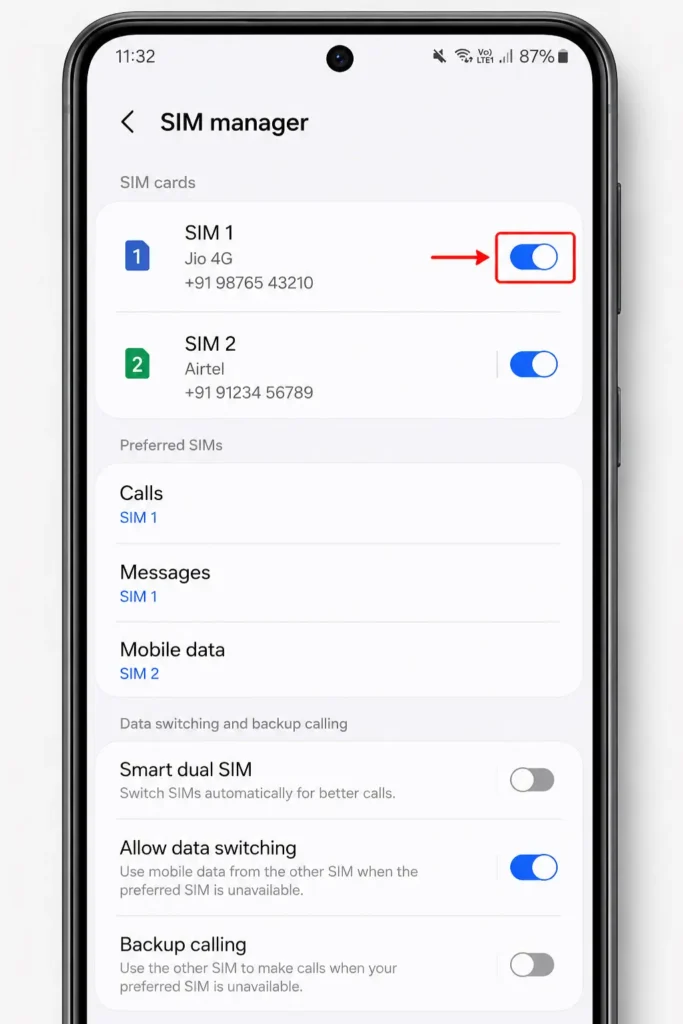
Go to Settings, then look for Connections (on Samsung phones) or Network & Internet (on Pixel and most stock Android phones). From there, tap SIM Manager or SIMs. Check if the toggle next to your SIM slot is switched on. If it’s off, turn it on. If it’s already on, turn it off, wait 15 seconds, then switch it back on to force Android to re-detect the card.
Solution 4: Clean the SIM Card Contacts
If restarting and toggling settings didn’t help, it’s time to physically check the card itself. This is one of the most common causes of a “SIM card not recognized” error, especially if you’ve had the same SIM in your phone for a couple of years.
Those small gold contacts on your SIM card pick up dust, skin oils, and a very thin layer of oxidation over time. It’s not something you can usually see with the naked eye, but it’s enough to interfere with the electrical signal. This exact fix has saved me from buying a “new” SIM card that didn’t actually need replacing.
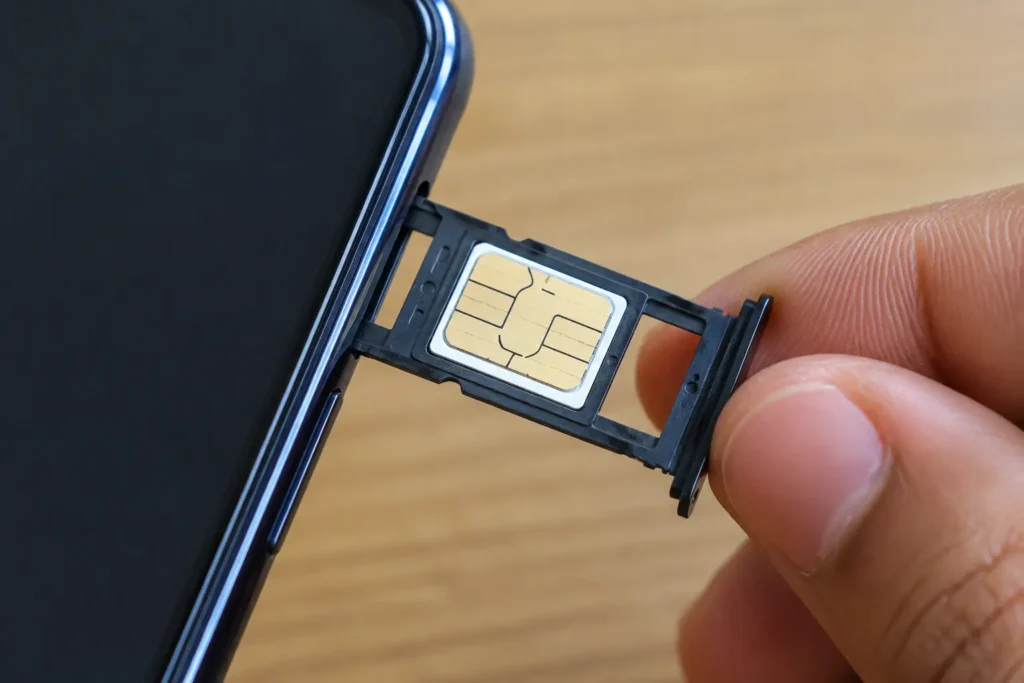
Power off your phone and eject the SIM tray using the ejector pin that came in the box (or a straightened paperclip works fine too). Take a clean, soft eraser the kind on the end of a pencil works well and gently rub it across the gold contacts. This lifts off the oxidation without damaging the thin gold layer. Wipe away any eraser bits with a dry microfiber cloth, then pop the card back in.
If the contacts look particularly grimy, a cotton swab lightly dampened with isopropyl alcohol (90% or higher) works well too. Just make sure the card is completely dry before reinserting it. Never spray liquid directly into the phone’s SIM slot.
Solution 5: Try a Small Paper Shim if the Card Feels Loose
This one sounds unconventional, but I’ve used it myself on an older phone that had slightly worn-out contact pins, and it worked like a charm.
Sometimes the little spring-loaded pins inside your phone’s SIM slot lose a bit of their tension over time, especially after a drop. This creates a tiny gap between the pins and the card, which causes the connection to cut in and out.
To fix this, cut a small piece of paper or clear tape to match the back (non-metal) side of your SIM card. Stick one or two thin layers onto the plastic backing never on the gold contact side and trim off any extra so it still fits inside the tray. This adds just enough thickness to press the card firmly against the internal pins. It’s a small trick, but it genuinely works for intermittent detection issues.
Solution 6: Inspect the SIM Tray for Damage or Debris
Take the tray out again and lay it flat on a table. Check if it looks bent, warped, or cracked anywhere. A damaged tray won’t hold the SIM card at the correct angle, which means the contacts won’t line up with the pins inside your phone.
If the tray looks fine, shine a flashlight into the empty slot and check for dust or lint buildup. A quick burst of compressed air aimed at an angle into the slot can clear this out safely. Avoid poking anything metal, like a needle or pin, directly into the slot it’s very easy to bend the internal reader pins by accident, and that turns a simple fix into an expensive repair.
If your tray is genuinely damaged, it’s worth ordering a replacement tray made specifically for your phone’s exact model. I’d avoid generic third-party trays since even a slightly different thickness can cause more detection problems than it solves.
Solution 7: Use the Hidden Testing Menu to Reset the Radio
This is a bit more technical, but it’s one of my favorite tricks because it targets the cellular radio directly without needing a full phone reset.
Open your phone’s dialer app and type in ##4636##. On most Android phones, this opens a hidden testing menu. Tap “Phone Information,” scroll down to find “Mobile Radio Power,” and switch it off. Wait around 30 seconds, then switch it back on. Restart your phone afterward for good measure.
A quick note: some carrier-branded or heavily customized phones (certain LG models, for example) block access to this code. If nothing happens when you dial it, just move on to the next fix.
Solution 8: Manually Select Your Network Operator
If your phone’s automatic network scanning is stuck or confused, sometimes forcing it to reconnect manually clears things up. This has fixed “Android no service” issues for me more than once, particularly after switching between LTE and 5G coverage areas.
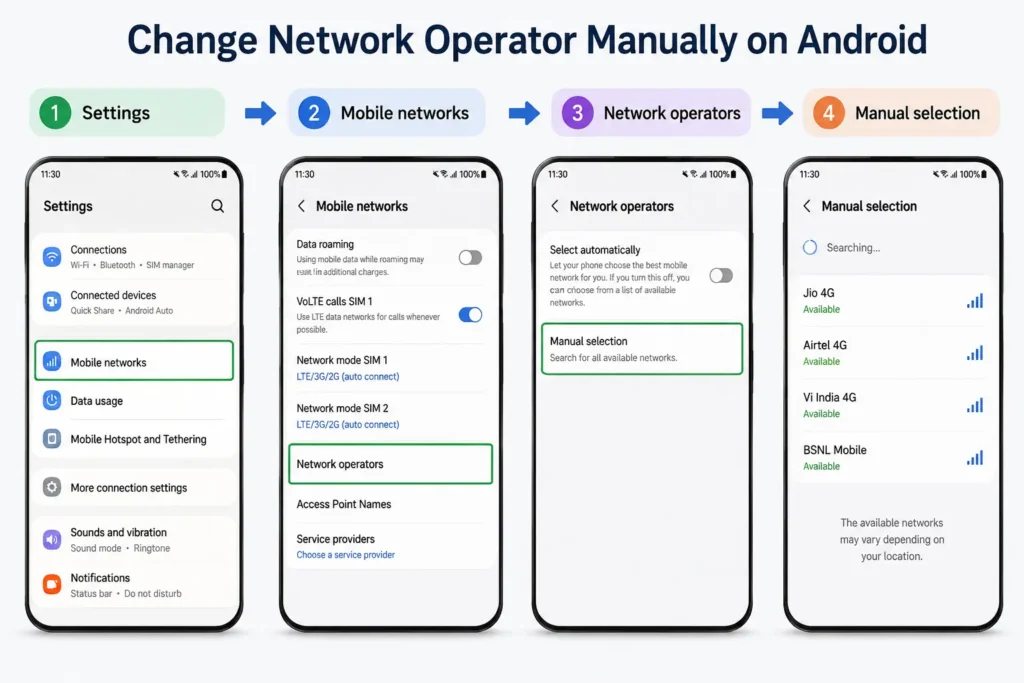
Head to Settings, then Mobile Networks. Tap “Preferred Network Type” and temporarily switch it to something like “LTE/WCDMA/GSM auto” or “4G only” instead of full automatic mode. Then go to “Network Operators,” turn off “Select Automatically,” and let your phone scan for nearby towers. This can take up to a minute. Choose your carrier’s name from the list once it appears, and once you’re reconnected, you can switch “Select Automatically” back on.
Solution 9: Clear the SIM Toolkit App Cache
The SIM Toolkit is a built-in Android app that handles special commands sent by your SIM card. If its cache gets corrupted, which can happen during a system update, it can interfere with SIM detection entirely.
Go to Settings, then Apps. Tap the three-dot menu in the corner and select “Show System Apps.” Scroll down and find SIM Toolkit (on some phones it might show up under your carrier’s name instead). Tap “Storage & Cache,” then “Clear Cache” followed by “Clear Data.” Restart your phone once you’re done.
If your Android SIM card problem started right after a software update, this is genuinely one of the more effective fixes, since it forces the system to rebuild its configuration files from scratch.
Solution 10: Reset Your Network Settings
If you’ve made it this far and nothing has worked yet, a full network settings reset is worth trying before considering a factory reset. This wipes saved Wi-Fi passwords, Bluetooth pairings, and APN settings, but it won’t touch your photos, apps, or personal files.
On Samsung phones, go to Settings, then General Management, then Reset, and choose “Reset Mobile Network Settings.” On Pixel or stock Android phones, it’s under Settings, System, Reset Options, then “Reset Wi-Fi, Mobile & Bluetooth.” After the reset finishes, restart your phone. It’ll pull fresh network settings directly from your SIM card and carrier.
Solution 11: Check for a Pending Software Update
Sometimes the fix is one you already have sitting on your phone waiting to be installed. Manufacturers regularly push out updates that specifically patch modem and baseband bugs that cause SIM detection issues, particularly after a major Android version update.
Connect to Wi-Fi, then go to Settings, About Phone, and Software Update. If there’s an update available, install it. This alone has resolved “SIM card not detected after update” complaints for a lot of people I’ve spoken with, since it’s often the update itself that introduced the bug in the first place, with the fix following shortly after.
Solution 12: Check Your eSIM Settings (If Applicable)
If your phone supports eSIM and you’re using a digital profile instead of, or alongside, a physical card, the fix looks a little different. Go to Settings, Network & Internet, then SIMs. If your eSIM profile shows up but looks grayed out, tap it and switch “Use SIM” to on. If it’s still not connecting, you may need to delete the profile and ask your carrier for a fresh activation QR code to set it up again from scratch.
How to Tell If It’s a Hardware Problem
If you’ve tried everything above and your phone still says “no SIM card error,” it’s worth figuring out whether the problem is your SIM card or your phone itself.
The easiest way to check is a simple swap test. Put your SIM card into a friend’s phone (or any other working phone). If it still doesn’t work there, the card itself is likely damaged, and your carrier can issue you a replacement, usually within a day. On the flip side, if you put a card you know works into your phone and it also fails, the issue is with your device.
Another quick check is dialing *#06# on your phone. This should immediately display your IMEI number. If you see a valid string of numbers, your phone’s baseband hardware is working fine, which usually points back to a software or contact issue. But if it comes back blank, “Unknown,” or “Null,” that typically means there’s a deeper hardware problem, possibly related to internal components, and it’s time to visit an authorized service center. According to a widely referenced troubleshooting breakdown on this topic the error can appear on almost every Android brand, including popular manufacturers, and often gets triggered by outdated software, a misaligned SIM card, or a damaged SIM slot.
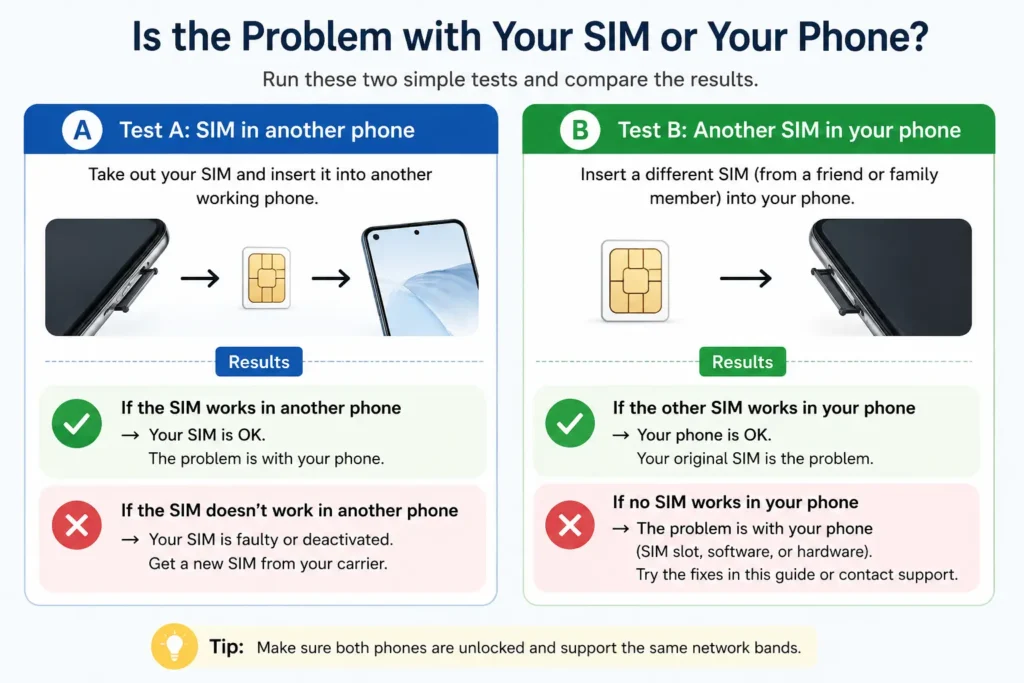
When All Else Fails: Factory Reset
If your phone shows a valid IMEI number but nothing else has worked, a factory reset is your last software-based option before involving a repair technician. Back up your photos, contacts, and important data first, either to a cloud service or your computer.
On Samsung phones, this is under Settings, General Management, Reset, Factory Data Reset. On Pixel and other stock Android phones, it’s Settings, System, Reset Options, Erase All Data. If your screen isn’t responding, you can also do this through recovery mode using your phone’s hardware buttons, though I’d only recommend this if the touchscreen fixes don’t work.
A Few Habits That Prevent This From Happening Again
After dealing with this issue a few times over the years, I picked up some habits that have genuinely kept it from coming back. I always power off my phone before removing or swapping a SIM card, rather than doing it while the phone is on. I hold the SIM card by its edges instead of touching the gold contacts, since skin oils speed up oxidation. And I try to keep my phone updated regularly, since a lot of these bugs get patched quietly in routine software updates.
If you’re also having trouble with your phone’s Wi-Fi dropping saved networks, I’ve put together a separate guide on that here: fixmydaily.com/wifi-password-not-showing-android.
Final Thoughts
A “No SIM Card Detected” error feels alarming the first time you see it, especially if you’re expecting an important call or need mobile data urgently. But in my experience, and in talking with plenty of others who’ve dealt with the same thing, it’s rarely a sign that your phone is broken beyond repair. Most of the time, it’s a quick fix: a restart, a clean contact, or a simple settings toggle.
Work through these solutions in order, starting with the easiest ones. Chances are you’ll have your SIM card back up and running before you even need to think about visiting a repair shop.
Frequently Asked Questions
Quick answers to common questions about the “No SIM Card Detected” error on Android
This usually happens because of a communication breakdown between your SIM card and your phone’s baseband processor, which is the chip that manages calls, texts, and data. It can be triggered by a loose SIM tray, a background software crash, dirt on the gold contacts, or sometimes a recent software update. In most cases it’s fixable at home with a restart or a quick clean of the SIM contacts, without needing a repair shop.
Start with the simplest software fixes first. Restart your phone completely, wait about 30 seconds before turning it back on, and check if the error clears. If not, toggle Airplane Mode on and off from your Quick Settings panel, or check your SIM Manager settings under Settings to make sure the SIM slot toggle hasn’t been switched off accidentally. These steps fix the issue for a lot of people without ever touching the physical card.
Software updates occasionally introduce bugs in the modem drivers or corrupt cached data used by the SIM Toolkit app. This can cause Android to lose track of the SIM card even though nothing physically changed. Clearing the SIM Toolkit app’s cache and data, then restarting your phone, usually resolves this. If a newer update is available, installing it often fixes the bug that caused the problem in the first place.
If the error appears specifically after restarting, it’s often a sign of a loose physical connection rather than a software glitch, since the SIM has to reseat itself during boot. Eject the tray, check that the card is seated flat and facing the correct direction, and look for any dust in the slot. If the card still doesn’t seat firmly, a thin paper or tape shim on the back of the card can help press it against the internal reader pins.
The easiest way is a simple swap test. Put your SIM card into a different phone you know works. If it still fails there, the card itself is likely damaged and your carrier can issue a replacement. Then try a SIM card you know works in your own phone. If that one also fails to be detected, the issue is with your device, not the card.
Dialing *#06# should display your phone’s IMEI number, which confirms your baseband hardware is working. If the result comes back blank, “Unknown,” or “Null,” it usually points to a deeper hardware issue, such as damage to the internal logic board or baseband chip, often caused by a drop or liquid exposure. In this case, software fixes won’t help, and the phone needs to be looked at by an authorized repair technician.
Yes, and it’s more common than people expect. The gold contacts on a SIM card can pick up a thin, invisible layer of oxidation and skin oil over time, which interferes with the electrical connection. Gently rubbing the contacts with a soft eraser, or wiping them with a cotton swab and a bit of isopropyl alcohol, often restores a clean connection. Just make sure the card is fully dry before putting it back in the tray.
A factory reset can help if the issue is caused by deep software corruption, but it should be your last resort after trying the simpler fixes, since it wipes your phone’s data. It’s only worth trying if *#06# shows a valid IMEI number, which confirms the hardware itself is fine. Always back up your photos, contacts, and files before doing a factory reset.
This usually means your digital eSIM profile has either been turned off or become corrupted. Go to Settings, then Network & Internet, then SIMs, and check if your eSIM profile is listed but grayed out. If it is, switch the “Use SIM” toggle on. If the profile isn’t registering at all, you may need to delete it and ask your carrier for a new activation QR code to set it up again.
Intermittent drops are often caused by a slightly loose connection inside the SIM slot, especially on phones that have been dropped or used for a few years. A paper or tape shim on the back of the card can add just enough thickness to keep it pressed firmly against the internal pins. It also helps to avoid removing the SIM tray while the phone is powered on, since that can add extra wear to the reader pins over time.